Thursday, December 23, 2010
8th Trade is still 40 PIPS loss...
40Pips loss, Pinoypips is now on twitter, follow us on our daily update from Forex Morning Trades.


Wednesday, December 22, 2010
7th trade short of LUCK!
7th Trade was a 40 pips loss, still looking to trade for 2 more days and we'll end the year on the green territory!
I have uploaded a video on Pinoypips.com facebook page, view it, "like" it and leave some comment.
The video is about how to use Stochastic oscillator profitably, this is easy and straight forward.
Check out our facebook page here.
I have uploaded a video on Pinoypips.com facebook page, view it, "like" it and leave some comment.
The video is about how to use Stochastic oscillator profitably, this is easy and straight forward.
Check out our facebook page here.
Monday, December 20, 2010
6th Trade, Were back in green!
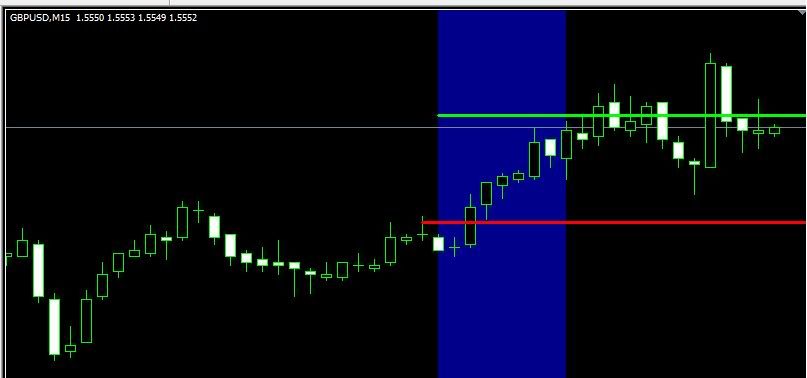
6th trade bring us back to the green territory and give us back 35 PIPS. I'm looking to end 2010 with a remarkable PIPS in the bag, four more trades for the week.
Get now your own copy of Forex Morning Trades here.
Sunday, December 19, 2010
5th day another red...Looking forward for next week trades
To wrap it up, Forex Morning Trades performance for the week of Dec. 13 to 17, 2011.
Date FMT Signal PIPS
Dec. 13 Short 36 Profit
Dec. 14 No Trade 0 Still go long and ends up with 30 pips profit
Dec. 15 Short -32 Loss
Dec. 16 No Trade 0 No trade
Dec. 17 Long -37 Loss
------------------------------------------------------------------------------------------------------
Total -33 Loss
====================================================================
We have a new week coming and I'm confident we'll have a better result, I'm looking at 30 PIPS per day for 4 days.
Date FMT Signal PIPS
Dec. 13 Short 36 Profit
Dec. 14 No Trade 0 Still go long and ends up with 30 pips profit
Dec. 15 Short -32 Loss
Dec. 16 No Trade 0 No trade
Dec. 17 Long -37 Loss
------------------------------------------------------------------------------------------------------
Total -33 Loss
====================================================================
We have a new week coming and I'm confident we'll have a better result, I'm looking at 30 PIPS per day for 4 days.
Friday, December 17, 2010
4th Day is No trade day
I was out the whole afternoon and set up the EA to auto pilot, since no signal from the system no trade for today, for the last four days the system issued two no trade, one winning and one losing trade, but for me I have two winning trade, one losing trade and one no trade. One more trade for this week and we'll a week of data to rate Forex Morning Trades system a few more week of this and we can put more confidence on this system.
If you would like to get your own copy of this system, get it here.
If you would like to get your own copy of this system, get it here.
Thursday, December 16, 2010
GBPUSD long trade signal
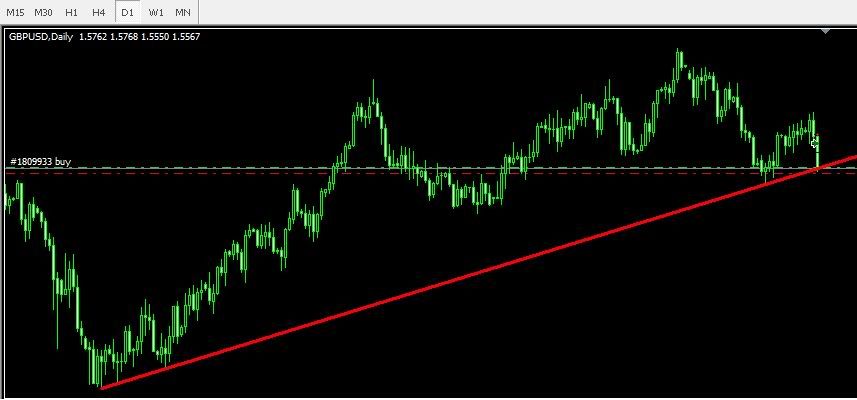
Daily chart of GBPUSD seems to be trading at the May uptrend line, seems to be a very good position to go long. I've entered long with a little bit of long term bias that it will bounce off this uptrend line.
3rd trade not so bad
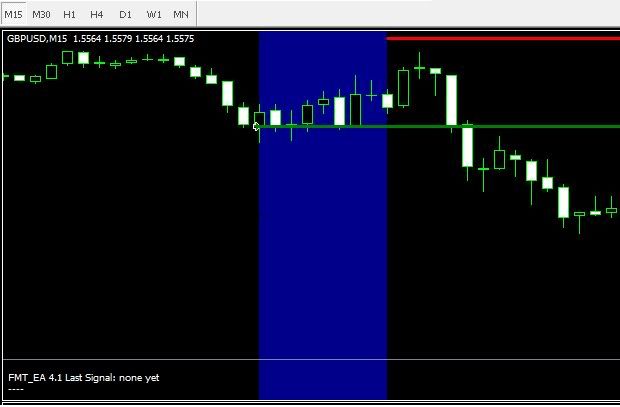
The 3rd trade hit the stop loss and I gave up 32 pips off the table. It did go down align with the short trade but it did hit my stop loss before going down dramatically. The good thing is since I'm trading with an EA and have no time to monitor the progress of the trade I've open with a lower lot size. We'll get them tomorrow guys!
Tomorrow will be another robot trade since I'll be attending to another office event, this time I'm looking forward for a profitable trade, will still trade with a smaller lot size same as today.
Wednesday, December 15, 2010
Two in a row!!!
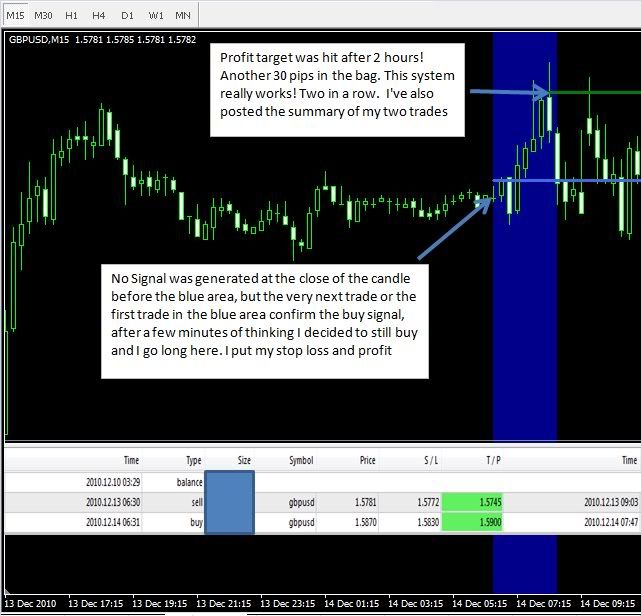
My 2nd trade with Forex Morning Trade system is another home run! Another 30 pips in the bag! The second trade is a little bit different as there was actually no signal to buy or to go long, since when the last candle closes before the blue area it's a point away in hitting the trigger BUY, but the first transaction after that candle shows the buy signal and after a minutes thinking about it, I decided to go long since the signal was a few seconds behind. I then set up stop loss and profit target and when off to office, when I check a little late in the afternoon "viola" 30 pips profit, this is unbelievable and it's surprisingly really easy!
I really suggest you get your hands on to this! Get your own copy here and let's rack up those PIPS!
Tuesday, December 14, 2010
First Trade with Forex Morning Trades System
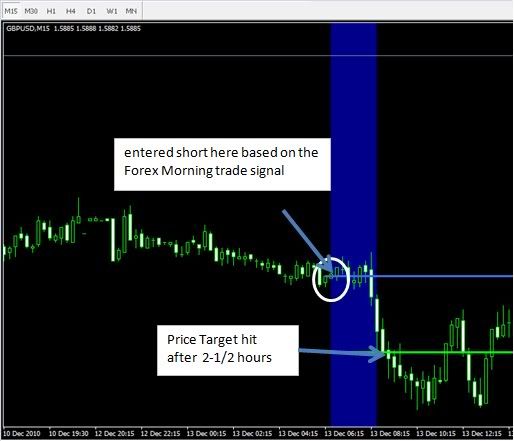
My First trade with Forex Morning Trades System is a bomb, it deliver what it promised, 36 PIPS in the bag!
After setting up the chart which is quite easy, I've waited for the signal, I also anticipate a short signal since indicators are pointing to that direction and sure enough it give a short signal which I manually entered and put corresponding stop loss and take profit, then I let it go to fulfill it's mission, to hit my PROFIT 36 PIPS!
If you would like to try it out you can get a copy of the Forex Morning Trades System click here.
Will post here daily trade using the Forex Morning Trades System.
Monday, December 13, 2010
Forex Morning Trades System

I just bought FOREX MORNING TRADE, It is 100% mechanical system with clear rules; it places one trade a day in the morning. It doesn’t require you to watch your position, the trade hits the profit or loss automatically.
Just imagine that your trading day looks as follows:
1. In the morning you’ll look at the charting platform and decide if you’ll open the trade – decision based on the rules of Forex Morning Trade system.
2. If the conditions are met, you’ll simply place a trade and walk away. That’s all. You don’t need to sit in front of the screen, monitoring your positions. The trade will either hit profit target or stop loss automatically.
It has been consistently giving a positive Pip balance every month. And I'll show here the progress of my own account using the FOREX MORNING TRADE system.
There is also a 60 day MONEY BACK guarantee, you have everything to gain and nothing to lose. Try it out and post here your own result.
Click here to get your own Forex Morning Trade system!
Thursday, December 2, 2010
JOIN the 55th edition of Non-Farm Payrolls live trading
Trade Non-Farm Payrolls LIVE: TOMORROW
This is the 55th edition of Non-Farm Payrolls live trading from FX Bootcamp in partnership with FXStreet.com.
I've have attended this seminar and they have live trades racking up the pips on the most volatile news announcement of the month NFP! Knowing how to trade the news will surely give you edge in trading FX and this event can provide the learning you need. Go check it out your self and see you on this webinar. I'll post my trade here after the webinar. Trade at your own risk.
A very good source of education on news trading.
SPECIAL EVENT: Trade Non-Farm Payrolls LIVE - 55th Edition
Type: Webinar
Sponsored by 
Register for this Session
Expert: Wayne McDonell, Chief Currency Coach at FxBootcamp
Moderator: Maud Gilson
Start: Fri, Dec 03 2010 12:30 GMT
End: Fri, Dec 03 2010 15:30 GMT
Participants: 116 pre-registered participants
Expert: Wayne McDonell, Chief Currency Coach at FxBootcamp
Moderator: Maud Gilson
Start: Fri, Dec 03 2010 12:30 GMT
End: Fri, Dec 03 2010 15:30 GMT
Participants: 116 pre-registered participants
Summary:
Come join us – NOW 1000 seats available, register now!
Trade Non- Farm Payrolls LIVE with Wayne McDonell - FXstreet.com & FX Bootcamp are partners of this event. Don’t miss out on a great opportunity to learn keys to trade this economic report and ask questions while the market is moving!
FX Bootcamp provides live play by play commentary and analysis during the release of the Employment Report:
- Learn how to conservatively trade during news events.
- See technical analysis applied to live market charts.
- Apply Pivot Point & Fibonacci Theories in real-time.
- Entry and exits point clearly defined in advance.
- Ask questions while the market is moving.
- Get the NFP NEWS Live!
Come join us – NOW 1000 seats available, register now!
Trade Non- Farm Payrolls LIVE with Wayne McDonell - FXstreet.com & FX Bootcamp are partners of this event. Don’t miss out on a great opportunity to learn keys to trade this economic report and ask questions while the market is moving!
FX Bootcamp provides live play by play commentary and analysis during the release of the Employment Report:
- Learn how to conservatively trade during news events.
- See technical analysis applied to live market charts.
- Apply Pivot Point & Fibonacci Theories in real-time.
- Entry and exits point clearly defined in advance.
- Ask questions while the market is moving.
- Get the NFP NEWS Live!
Saturday, November 20, 2010
Finding a good Forex Broker
How to select a forex broker
by Pharaoh
by Pharaoh
Another one from Pharaoh of Forex Peace Army after how to avoid getting scammed while buying forex products. Finding a good forex broker is even more important.
I currently have active accounts with several brokers. I won't name those brokerages in this article. Actually, I won't mention any other brokerage names in this article. My purpose in writing this article is to help you select the forex broker that is right for YOU, not to tell you which broker you should chose.
If you've have already picked a forex broker that you are completely happy with, then you're done. If you are having trouble deciding which broker to trade forex with, please read on.
From my perspective, choosing a forex broker is a personal decision. First, you need to make a list of what you want from a broker. Some things you will absolutely require, others will be things you want, but can live without.
There are so many factors to consider. There is no way I can list them all, but here are some of the major ones:
What country is the forex broker regulated in? Is the broker regulated at all? Some aren't. Some will claim to be "self-regulated." That means they are unregulated, but they aren’t honest enough to admit it. There are a few unregulated brokers that aren't too badly rated. The problem with this is how do you know they won't go bad later? Regulation doesn't guarantee that a broker is a good broker, but at least gives you some recourse if things go terribly wrong. Also, remember that some countries have better regulations than others.
Does the broker allow clients from your country? Not all brokers allow traders from all countries. There was one well-rated brokerage in the UK that I really wanted to open an account with, but they aren't legally allowed to have accounts from residents of the USA.
What country is the brokerage located in? Many brokerages are multinational. Just because they are regulated in one country doesn't mean their primary offices are there. Since I live in the USA (most of the time - "Ni hao!" to all my friends in Guangdong Province), I prefer a forex brokerage that is both based in and regulated in the United States. This saves me the effort of getting my passport out of the safe if something strange happens and I feel an overwhelming need to pay them a visit to express my annoyance in person. Don't trust the brokerage if it claims to be regulated, check them out yourself on the regulator's website to be sure. There are a lot of "Swiss Brokers" that are about as Swiss as the Swiss cheese that I buy at the grocery store (which is made in Wisconsin).
Can you use a downloaded trading platform, or do you need a web-based trading platform? If you trade from home or have administrator access on your work PC (and your boss doesn’t mind), then you can install a trading platform like MetaTrader. If you can't install software where you will be trading from, then look for a broker with a web-based forex trading platform. If you plan to trade with automated EAs, you'll need a broker that has MetaTrader. There are other platforms that allow autotrading, but there aren't nearly as many products available to work on them.
Does the broker permit your trading style? This is very important if you plan to newstrade or scalp. Some brokers might suspend you. Others will cancel your winning trades (but never your losing trades). Certain extremely unethical brokers will decide that your trading style has caused them "damages" and will confiscate as much of your account as they feel like.
How low can you go? Some brokerages allow you to open an account for $1. Some brokerages allow you to trade nanolots (1 cent per pip of xxxUSD pairs) or even lower. On the other end of the cost spectrum, there is one very well-rated brokerage which requires $50,000 to open an account. If you want to live test EAs or other trading systems, nanolots are a good way to do it without risking a lot of money. If you have plenty of money to trade with and are just looking at changing to a better forex broker, this won’t be that big of an issue for you.
Do they offer swap-free (Islamic) accounts? Followers of the Islamic faith are forbidden to charge or pay interest. People who want to hedge a trade with a negative swap pair also would like to avoid paying interest. Whether for religious or hedging reasons, be careful - many "swap free” accounts have a daily fee that can cost significantly more than you would pay for swap interest.
For typical accounts, how are the swap rates? It's normal to charge a little more on negative swap than what a trader gets paid for positive swap, but some brokers use this as another way to squeeze even more money from hard working traders. Some brokers charge negative swap both ways on some or even all pairs. If you rarely leave trades open for very long and can avoid the time that swap is charged, this won't affect you. For those who trade specifically to collect interest, this could be one of the most important factors in picking a broker.
How can you move money in and out of your account? Some brokerages only do wire transfers and charge some pretty high fees for the privilege. If you plan to move several thousand dollars every time, this isn't too bad. If you want to withdraw $50 or $100 at a time, then a $25 or more wire transfer fee really cuts into profits. Look for a brokerage with ways to fund and withdraw that are acceptable to you. Don't wait until you've made some money and then find out that it's difficult and expensive to get your profits. When you first fund your account, put a little extra in and test the withdrawal process with the extra money just to be sure you can get money back out. Personally, I like a brokerage that has free withdrawals by check. Sure, it takes a few days longer, but I don't have to pay any fees.
What currency pairs does the broker have available? Some only have a few, other have a huge range of choices. If you only want to trade the major pairs, this shouldn't be a problem for you. If you like trading anything that moves, look at brokers with broader offerings. Some brokers even offer non-forex products on the same trading platform. Keep in mind that some brokerages have fewer pairs on their demo accounts than on their live accounts. Some also have fewer pairs on mini accounts than on regular accounts. If this information isn't listed on their website, you'll need to contact them to ask.
I'm sure there are at least a dozen things I left out. As you can see, some of these features will be very important to you, and others you won't care about at all. Everyone's list will be a little different.
Break your list into 2 pieces. First, the list of things you MUST have. Any broker that doesn't meet these requirements is one you will not consider at all. Take everything on your second list and put it in order of priority for you.
Now comes the hard part. There are broker comparison tables out there, but finding one with all of the features you want listed will be hard, if not impossible. The other way to approach this is to call up FPA's broker reviews, sorted by rating. Start with brokerages that are 4 or 5 star rated with a reasonable number of reviews. Skim through the reviews and make sure there are no significant problems getting money out of the account. Then check the broker’s website, make sure they can open an account for someone from your country. If so, then see if they meet the absolute requirements of your first list.
Depending on your list, you may find no 4 or 5 star brokers that meet your absolute requirements (when I picked my primary broker, I didn't). If so, go through the 3 star brokerages. Your goal should be to find several brokerages that meet not only your absolute requirements, but also many or all of the desirable features second half of your list.
This is so important I'm going to repeat myself. Exclude any brokerage with complaints about significant problems getting money out of accounts. Why work hard trading forex to make your fortune if you can never withdraw any profits? By significant problems, I don't mean that one person whined about a single withdrawal taking a few days longer than expected. I mean people who seriously tried to withdraw money, made many attempts, and it took much longer than it should, or (worse yet) they never got the money. If you have some strange urge to send your money away with absolutely no chance of ever getting any of it back, mail it to me and I promise never send it back to you.
Unless your standards are very low, you probably have a short list of brokerages now. Reread the reviews and examine the websites of each of your candidates to make sure there isn't anything about any of them that you can't live with. Then rank them by how well they meet the requirements of your second list.
Now comes the time to open demo accounts for the best 2-4 brokers on your list. Demos don't perform exactly like live accounts, but will let you get familiar with the trading platform(s) your candidate brokers offer. Unless a brokerage will let you open an account with less than $10, I would personally avoid any brokerage that says to skip demo trading and go straight to live trading. A legitimate forex brokerage should give you a chance to learn how to use their trading platform without risking real money if you accidentally press the wrong button.
Check the website of each of your candidate brokerages to see how informative it is. See how many different ways there are to contact support and try them all. Ask all sorts of questions and see how quick and complete the responses are. Make sure to get all possible information about how to add money to your account and how to withdraw your money. Be aware, some brokers do require more information to process withdrawals than deposits. Have a scanned copy and photocopies of your ID ready to send to the brokerage if these will be needed either to open the live account or to withdraw your money from it.
Now it's time to open a real account.
Pick the one broker from your candidate list that you are the most comfortable with. Deposit a little more than their absolute minimum to open an account. Place a few trades of the smallest amount they permit over a day or two.
Can you remember what you need to do next? That's right! Try to withdraw a small amount of money and see if this is easy or not. If they give you significant problems, close the account, withdraw all of you money, and move on to the next broker on your list.
Assuming the brokerage has passed all the tests you have given to them so far, trade small quantities with them at first. Treat the new brokerage the same way you would treat a new trading system and use the most cautious levels of risk management at first. If all goes well, scale up until you are
trading as you normally would. Watch out for large slippage, excessive spreads, frequent requotes, and all the other stupid broker tricks that somehow end up making traders lose a few extra pips here and there. If you encounter too many problems like this and the support staff at the brokerage can’t fix them, then close the account and try the next broker on your list.
Remember, good brokerages can go bad. Well-regulated brokerages can go out of business with little or no warning. Never let your guard down. Double-check all of your account statements. Keep an eye on the reviews for your brokerage. If you see complaints about withdrawal problems, try withdrawing some of your money to see if it's a real problem or just an impatient person who likes to complain. If your brokerage is regulated, check the regulator's website at least once a month to see if there are any new issues.
There is no single perfect forex broker for everyone. If everyone followed a broker selection system like this, then the worst brokerages would quickly go out of business, and the rest would soon realize that they need to work very hard to earn and keep the respect and business of forex traders.
I look forward to seeing what features others consider to be important when selecting a forex broker.
Friday, November 19, 2010
FOREX SCAM!
How to avoid getting scammed when buying forex products
Before I give any other methods, let me state the 2 absolute most important things you need to avoid getting ripped off. These are EDUCATION and RESEARCH. If you don't understand these, then the rest of the advice I'm about to give will not be nearly as useful.
Too many people get into forex with a dream of making big money very fast. Yes, it is possible to make a lot of money very quickly trading forex, but more than 90% of all traders lose. If you don't educate yourself about forex trading, you WILL lose money, and you will lose it quickly. Educating yourself about forex trading won't guarantee that you make money, but it will certainly slow your loses and arm you against the legions of people selling "You can get rich quick in forex if you'll buy my product right now before I raise the price!" type products. A few of these are worthwhile, but most are not.
One very easy way to avoid getting ripped off is to not buy anything at first. If you are new to forex, you probably haven't even decided if you want to scalp the 1 minute charts, trade the hourlies, swing trade, or carry trade. If you don't know what these terms mean, put your wallet away and don't buy anyone's "guaranteed profits" products until you at least understand the basic terminology.
To get educated, there are many places you can go. Felix is adding educational sections to the FPA forums. Also, dig through the old postings in the various folders of the FPA's forums. So many questions have been asked and answered. If you want to follow the Daily Trading Signals, visit the Daily Trading Signals archive and look at how Sir Pips not only predicts market reactions for the coming day, but also how he discusses what happened the day before. Once you've read through the collected wisdom of FPA's forums, don't forget to check the educational material on many other websites. Many brokers have basic forex courses available for free.
Whatever you do, don't spend even 1 penny until you've gone through at least some of the tons of totally free material available on the FPA website and elsewhere on the web. There are plenty of people who will charge you anywhere from $10 up to many thousands of dollars for materials that turn out to be a low quality ebook or a painfully bad set of videos to cover the simplest material that you can easily find for free on the web.
Ok, assuming you've successfully educated yourself about the basics of forex trading, now you hopefully have some idea of how you would like to trade. Some people want to place a few trades per day (or only a few per week). Others want to make dozens of trades per day. If you haven't found something for free on the web that suits your style, now is the time to consider shelling out some cash. Before spending anything, you should do some research.
A good place to start is FPA's review pages for forex products and companies. New products come out every day, so you may see ads for things the FPA doesn't have reviews for. If one of those products really tempts you, use the "Submit a Site" button from the correct category and one of the Review Moderators will probably create a page for it. You can also start a discussion thread in the "Has Anyone Heard Of?" discussions folder.
If you find something interesting that is reviewed, don't buy it just because it has 4 or 5 stars. Read the reviews! Recently, there was a trading room with a 5 star rating that turned bad. FPA's ratings are a simple average, and there were so many 5 star reviews that it took a long time for it to drop to 4 stars, and even longer for it to drop to 3 stars. If a product suddenly shifts from getting almost all 4 or 5 stars to almost all 1 or 2 stars, this is a pretty strong indicator that something has changed (and not for the better). Another reason to read reviews is that some reviewers are MUCH more informative than others. If someone has live-tested some software for 3 or 4 months, I'd personally give that person's opinion a lot more weight than someone who used it for 3 days and then posted a 5 star rating with a promise of an update later.
Although I firmly believe that FPA's ratings are the best on the web, it is not a bad idea to run a web search and see if other review sites and other forums have any additional information on a product.
Assuming you've done all of this, you aren't quite done yet.
You'll need to select a product that fits you. Some signals come at a certain time of day and are set and forget. Others can come at any time of day or night. One time I almost signed up for a very highly rated trading room, but then saw that they primarily traded the London open (which is the middle of the night for me). Some trading methods are profitable, but have very large drawdowns that might be a bit too stressful for some traders (like me!). Some software only works with MetaTrader. If your broker uses it, fine. If not, then you will have issues. Even if it is a great product, you'll waste your money if it doesn't fit your schedule and trading style.
A little work with a whois site can show you how long a website has been around. Be very cautious if a website has endorsements claiming that a product has been successful for years when the product's website only hit the market a few months ago. This doesn't guarantee that the product is a scam, but it is a major reason to be cautious and ask a lot more questions before buying the product.
See if the product has any sort of performance record. Some do, some don't. Remember, even if it has a record that is independently audited (definitely a plus), your results will still vary depending on your exact entries, exits, and spreads. If you don't believe this, read where I report my results from testing signals from Intelli4x.com. Overall, I've usually been very lucky and do better than the "official" profit reports (but sometimes, it goes the other way and I make less). Your broker's spreads, as well as your exact entries and exits will make it almost impossible to match even a 100% accurate performance record pip for pip. If there is a performance record, see if any reviewers have made comments on how accurate or inaccurate it is.
Check and see if there is a moneyback guarantee. If you contact the company and they say they've never had anyone ask for their money back, ask them why they don't offer a guarantee since this should put them at no risk if they are telling the truth. Anyone claim that a moneyback guarantee isn’t needed because everyone has always loved the product should be a major red flag. There are some products that cost many thousands of dollars that have absolutely no guarantee. Maybe these products are good, maybe they aren't. I'm not going to risk my money to find out.
If there is a guarantee, check the reviews to see if there have been any issues getting money returned. Sometimes a return takes awhile, but it should happen. Also, read the terms of the guarantee. Some EAs will only give you your money back if you show them a live account statement for an extended period. Even trading nanolots, this could easily cost you more than the price of the EA. If they won't accept a demo statement showing it's not profitable for a refund, think very carefully before buying it. Also, beware of guarantees that just don't give you enough time to fully evaluate the product.
Free trial periods are also good. Like guarantees, they need to be long enough to evaluate the product. For most signals services, trading rooms, and strategies, I'd say that 2 weeks should be the absolute minimum for a free trial or guarantee.
Consider the price. If you can barely scrape up $500 to start your forex trading career, then spending $100 or more a month on a forex signals service or a trading room probably won't be a winning proposition for you. Buying a $1500 education and strategy course would also not be the best idea if you are doing forex on a budget. Unfortunately, in the forex world, price and quality are not tightly linked. There are products ranging from complete scams all the way up to amazingly well performing ones in all price ranges.
I hate to mention this, because this may tend to unfairly condemn some very good products. Look and see if the product has an affiliate program. Products that pay customers (or even non-customers) a large commission to resell the product tend to get very high reviews. Some of these reviews may be 100% legitimate, but some may be from people who are much more concerned with their ability to point out how well rated the product is so that they can sell it to others. Some products offer commissions as high as 75% of the price of the product. If the commission is that high, you have to take the 5 star reviews with a very large grain of salt. I see absolutely nothing wrong with getting a cut if I love a product and introduce a friend to it, but when the cut starts to get too big, I worry about the accuracy of reviews here and other info elsewhere on the web. I'm sure some of these products are great, but it is so much harder to get unbiased opinions of them.
OK, let's assume you've found a product that meets your needs, fits your price range, is well rated, has nothing suspicious in its reviews, has a good guarantee and/or free trial period, and doesn't have any other extensive negatives. This is good. You probably aren't going to get ripped off. Congrats, your potential purchase has cleared the initial scam avoidance test, but there's still a lot more you can do to protect yourself.
Email some questions to customer support and see how long it takes for them to answer (or if they answer at all). Some products don't really need a lot of support, but others are very complex. If you can't get an answer out of a company before giving them money, they aren't too likely to trouble themselves over you once they have your money in their bank account. Check and see if they've got a contact phone number. If so, give them a quick call, just to make sure it is a real number.
Consider carefully how you make your purchase. It's nice when a company offers you multiple ways to pay, but some payment methods offer better protection than others. Wire transfer really isn't much better than handing someone an envelope full of cash. Unless you can prove fraud in a courtroom, you are not likely to be able to get money back from a wire transfer if a company's product fails to perform and they aren't willing give a refund. As far as various e-currencies and e-metals, I don't have any information about what sort of dispute resolution or fraud protection they do or don't offer. PayPal does offer some buyer protection, but sometimes places too high of standards of proof on the purchaser (as one of our members found out when he bought an EA that didn't work as he expected). So, what does this leave?
Overall, I have had excellent results with credit cards. This may vary a bit depending on the issuing bank, but Visa and MasterCard both impose very high standards on the banks, and can be contacted directly if the issuing bank gets lazy. Another very useful bit of information is that you can often request a chargeback when complaining about something bought with a credit card. Chargebacks cost the company you are complaining about a penalty in addition to the amount that is refunded to you. Make sure to explain why you are requesting a chargeback. Valid reasons would be things like the company failing to deliver the product, failing to honor a moneyback guarantee, or a product description that is so innacurate that it could be could be considered fraudulent.
Products sold via ClickBank come with a default 8 week guarantee. Sellers may offer guarantees beyond this, but can't have anything less than 8 weeks from the initial purchase (recurring subscriptions are a little more complicated). Products offered via ClickBank and paid for with PayPal or a credit card would then give you 2 layers of consumer protection.
If you get a product or service with recurring billing, make sure to CC at least one of your own email addresses if when you sent the email to cancel (don't even think of only telling someone to cancel via the phone or in a chat - email and request an acknowledgment). That will give you a copy of the email with all headers, thus giving more proof that you did email the cancellation in time. Make sure to send you cancellation to all the addresses you have for the company (and again, request an acknowledgment). If you do get charged after canceling, don't scream scam right away. Contact the company first and give them a week to fix it. If they don't, then it's time to talk to your credit card company, ClickBank, or PayPal.
I can't promise that following all of this advice will save you from being scammed 100% of the time. If you do follow my recommendations, you should improve your odds of not wasting your valuable time (and money!) on the products that aren't right for you or are scam. Also, you should have a better chance of recovering your money of you do get caught in a scam.
Don’t forget. With any new software, trading room, strategy, or signals service, test them with a demo account and then a very small amount of cash at first. Read my article on Risk Management for more details.
Subscribe to:
Posts (Atom)